

What actually decides whether a basketball venue makes money?
Lessons from running 13 basketball venues across five cities: location, multi-court layouts and weekday off-peak hours decide a venue's economics, often before it opens.
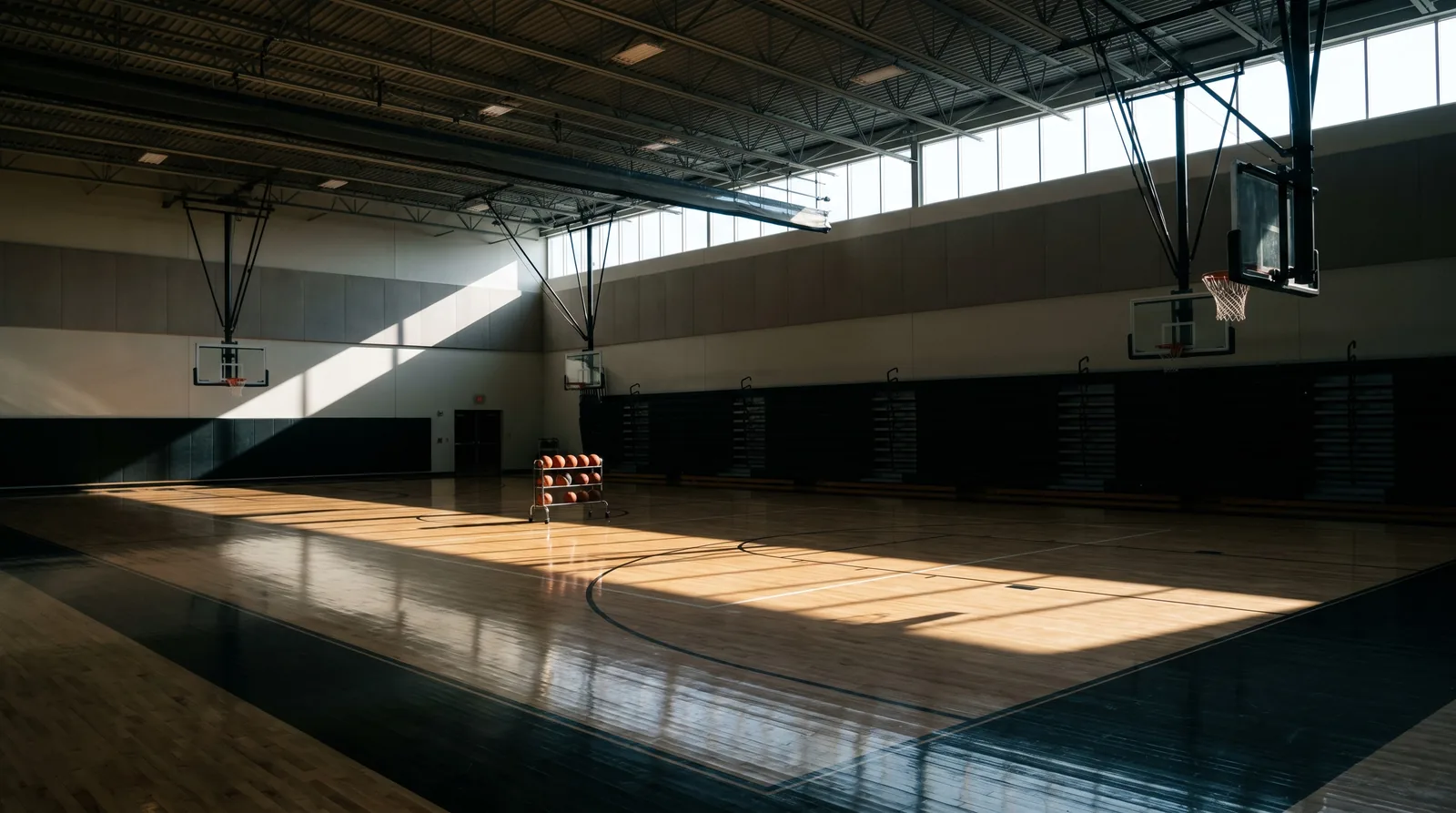
A basketball court is one of the worst uses of commercial real estate ever invented.
I know, because I ran 13 of them across 5 cities as CEO of Hoopbattle in China. Most of what I learned there had little to do with basketball. It was about square footage, fixed costs and what happens on a Tuesday at 10 a.m.
This article is for anyone who runs, or is thinking about opening, a court-based facility: a club that leases gym time, a venue owner deciding whether to add courts, or a league looking for a home.
We got in sideways
We didn’t start as a venue company. We got in through 3x3.
Our investors came from real estate and held shopping malls. A 3x3 tournament in a mall atrium solves two problems at once: the mall gets foot traffic, and the event gets a crowd.
But 3x3 was the way in, not the business. Almost every site we ran had at least one regulation full court, and many had several. Once you have a full court, you are in a different business.
A sports venue is a real estate business
A sports venue is not a sports business. It is a retail real estate business, and it is judged the way retail is judged: revenue per square foot.
Basketball is bad at that. A regulation court is 28 by 15 metres, about 4,500 square feet, and it needs at least 7 metres of clear height above it. You are renting a very large, very tall box and selling it by the hour.
Court rental alone does not cover rent, staffing and utilities. It isn’t close.
So every operator goes hunting for revenue that isn’t court time: programs, events, food and drink, sponsorship. That deserves its own article. But no amount of secondary revenue rescues a site that got three things wrong.
Three things that decide the outcome
1. You win or lose before you open
Access, and the people who live and work inside your catchment, matter more than anything you do after opening day.
Nobody drives past a closer court to reach yours. If a customer travels, there is a specific reason: a coach, a league, a program nobody else runs. If you can’t name that reason before you sign the lease, it doesn’t exist.
2. One court can’t carry itself
A one-court site pays for the same front desk, the same manager and the same minimum staffing as a three-court site, with a third of the inventory to sell.
Multi-court isn’t ambition. It is how fixed costs get spread across enough hours to pay for themselves.
3. Prime time is not where the business is decided
Youth training pays more per hour than open bookings, so it takes every peak slot. And peak sells out either way.
What separated the venues that made money from the ones that quietly didn’t was weekday mornings and two in the afternoon. Off-peak utilization was the lifeline, and the least interesting thing anyone ever asked me about.
Questions to ask about your own facility
If you run courts today, or are about to sign for some, these are the questions I would want answered first:
- Who is inside your catchment, and how do they get to you? Name the specific reason someone would travel past a closer court.
- How many courts share your fixed costs? Work out what one staffed hour costs you, and divide it by the courts you can sell in that hour.
- What is your weekday off-peak utilization? Not your Saturday. Your Tuesday morning and your Thursday at 2 p.m.
- Who could use those hours? Schools, seniors, shift workers, home-school groups, adult drop-in and private training are all people who are free when your regulars aren’t.
The money is never only in the part people come to watch
Events, leagues, venues, and now software for youth sports: I’ve worked on most sides of this industry. The through-line hasn’t changed.
The crowd sees the game. The business is decided in the hours nobody watches: the empty court at 10 a.m., the paperwork after the kids go home, the booking that never got made because nobody knew the slot was open.
That last part is a big reason we built SportsX.AI. Clubs and venues can publish their real availability so families can find and book it, including through AI assistants, instead of an empty court sitting unsold.
Sources
- Court dimensions and minimum clear height: FIBA Venue Guide, venue design and the FIBA Official Basketball Rules.
- Operating observations are the author’s own, from running Hoopbattle’s venues in China. They describe that market and are not a forecast for any specific facility.